

Consolidating “frontline” in management of belief and religious activities in Lao Cai
2 hours ago Views: 12 PrintFollowing the organizational restructuring and the operational rollout of the two-tier local government model, Lao Cai has consolidated its contingent of personnel engaged in belief and religious affairs. The immediate imperative now is to enhance the practical competence of grassroots officials, the direct frontline force responsible for receiving local needs, providing procedural guidance, grasping the situation on the ground, and handling arising issues.
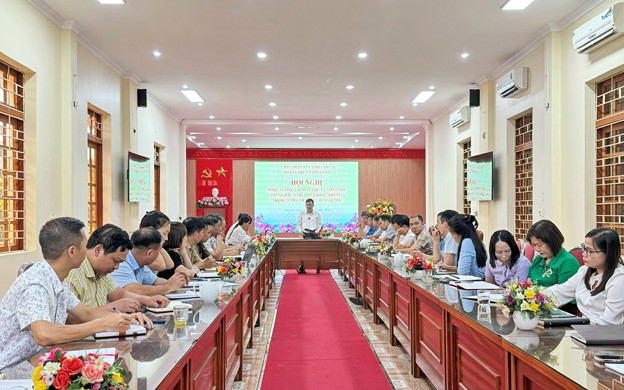
At a conference reviewing ethnic and religious affairs for the first six months of 2026 convened by Lao Cai provincial Department of Ethnic and Religious Affairs
Lao Cai province currently has 306 cadres and civil servants engaged in belief and religious affairs. Among them, the provincial tier comprises nine specialized civil servants assigned to the division of religious affairs under the provincial Department of Ethnic and Religious Affairs, and the commune tier comprises 297 cadres and civil servants.
At the commune level, the assigned staffing structure includes one vice chairman of the provincial People's Committee in charge of belief and religious affairs, one head or deputy head of the social - cultural division in charge, and one civil servant from the social - cultural division directly executing duties or holding concurrent responsibilities. While this arrangement clearly establishes focal points of responsibility at the grassroots level, most assigned personnel are newly appointed and lack extensive working experience in the domain of belief and religious affairs.
The workload extends well beyond paperwork
Commune-level officials represent the closest administrative force to belief establishments, religious organizations, and the people. Emerging issues concerning gathering premises, registration of collective religious activities, belief and religious festivals, land use, maintenance or construction of belief and religious facilities, and the handover of records following the rearrangement of administrative units typically surface first in local areas.
The province currently has 50 registered religious dignitaries and 282 concentrated religious practice groups including 191 Protestant groups, 73 Catholic groups, and 18 Buddhist groups. Each religion and locality possesses unique organizational characteristics, religious practices, and archival histories.
Grassroots cadres must therefore not only command standard administrative procedures, but also correctly identify and classify dossiers, coordinate liaison, and report to competent authorities. If guidance remains incomplete or inconsistent, legitimate needs may be protracted; if inspections and situation monitoring lack timeliness, minor issues can quickly become complicated.
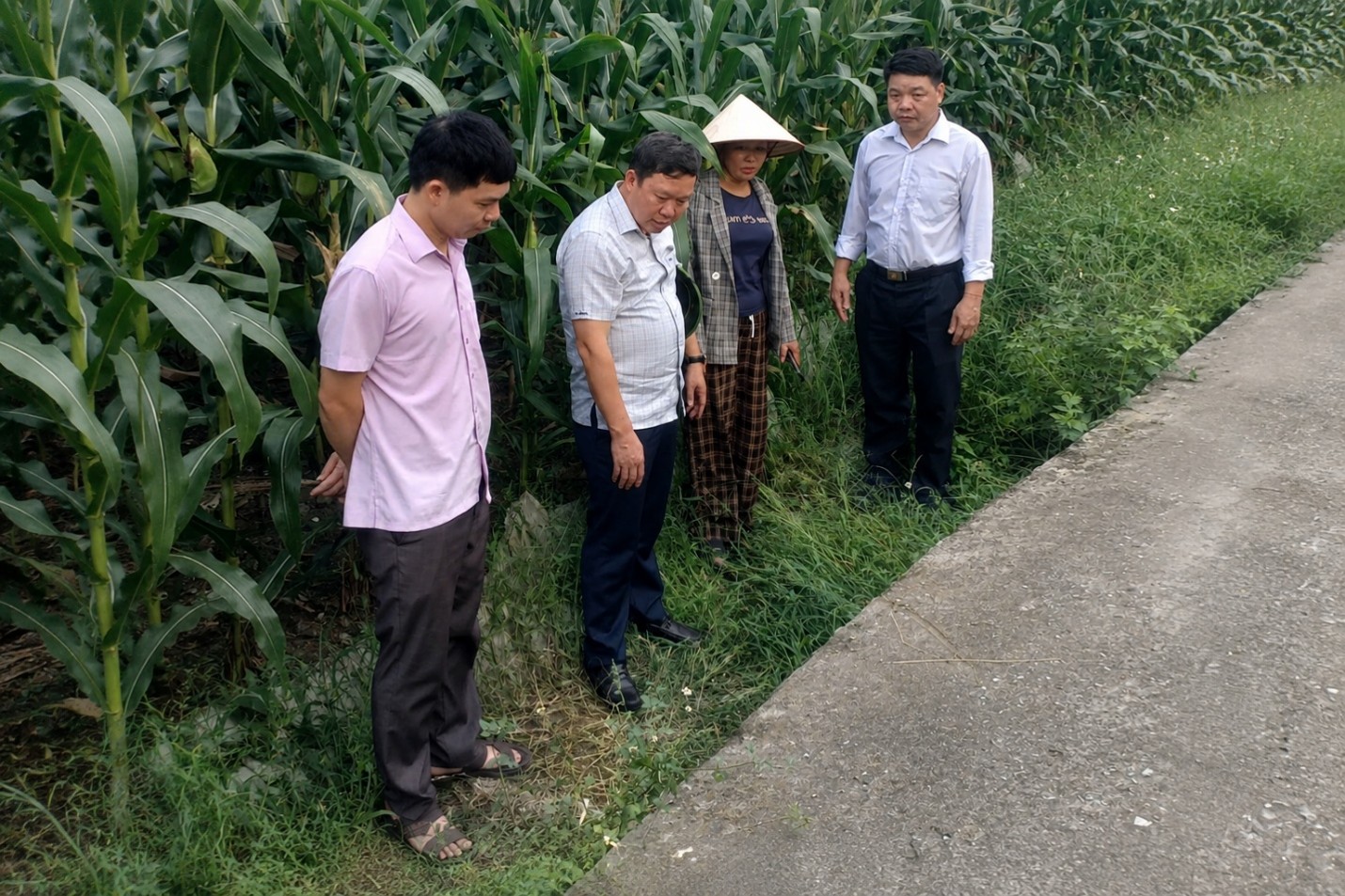
Director of the provincial department of ethnic and religious affairs Nguyễn Quốc Luận inspects and grasps practical situation at grassroots level
From consolidating numbers to improving practical capacity
Following the provincial merger and the implementation of the two-tier local government model, the personnel dedicated to ethnic, belief, and religious affairs have been fundamentally consolidated. However, high workloads, tight payroll quotas, and widespread concurrent multitasking continue to impact situational monitoring, advisory work, and the handling of emerging local issues.
To meet these emerging requirements, the Department of Ethnic and Religious Affairs issued Plan No. 76/KH-SDTTG dated May 13, 2026, on professional training in belief and religious affairs for commune-level cadres and civil servants. According to the Department's report, local fiscal budget allocated 287 million VND for administrative reform and state management capacity-building, with a dedicated focus on professional training and operational coaching for communal officials.
To ensure training delivers substantive results, course content must strictly track routine real-world scenarios: receiving and processing applications for registration of collective religious activities; activities of dignitaries, deacons, and monastics; religious gatherings outside designated places of worship; land and construction dossiers in the belief and religious sector; information reporting regimes; and inter-agency coordination mechanisms for dispute resolution.
Alongside statutory knowledge, officials must hone active listening, explanation, and mobilization skills when engaging with organizations and individuals conducting belief and religious practices. Approachability cannot replace adherence to principles, jurisdiction, and due process; practical competence must harmonize legal literacy, local awareness, and nuanced engagement tailored to each target group.
Data must serve as a frontline tool
The provincial Department of Ethnic and Religious Affairs also noted that digital transformation infrastructure and applications within ethnic, belief, and religious affairs remain limited, and a centralized specialized database is not yet in place. Data updating, compilation, and aggregation are still conducted predominantly by hand, thereby affecting predictive accuracy, situational assessment, and operational leadership efficiency.
Following the rearrangement of administrative units, records concerning dignitaries, deacons, monastics, practice groups, belief establishments, land plots, construction works, and procedural histories must be standardized to facilitate seamless handover and retrieval. Comprehensive databases will enable newly assigned officials to onboard rapidly, minimize information disruption, and reduce reliance on individual institutional memory.
For the latter half of the year, the Department has resolved to review, update, and digitize administrative archives; conduct field surveys on the actual status of Protestantism; review land and construction facilities tied to belief and religion; and concurrently organize further professional development courses for commune-level personnel. These two workstreams are interdependent: quality data sharpens advisory output, while competent personnel ensure data is accurately updated and utilized effectively.
Seamless connectivity from the Ministry down to the ground
Strengthening commune-level capacities is not solely a local undertaking. Professional guidance issued by the Government and the Ministry of Ethnic and Religious Affairs (MERA) is operationalized by the Department and uniformly conveyed to the grassroots level; conversely, jurisdictional bottlenecks exceeding local authority are compiled by communes, reported to the Department, and submitted to central agencies for guidance.
An unhindered loop of guidance – execution – feedback prevents communes from having to handle matters beyond their authority alone, while supplying empirical ground data for provincial and central authorities to further refine policies and operational guidelines.
The contingent of 297 commune-level cadres and civil servants constitutes the true “frontline” bringing laws on belief and religion into daily life. Personnel consolidation is merely the opening step. The true measure of governance quality will reside in providing sound guidance, promptly resolving legitimate needs, detecting emerging problems early, safeguarding the right to freedom of belief and religion, and preserving stability and solidarity directly from the grassroots up.
Thuần Linh
THỐNG KÊ TRUY CẬP
Số lượt truy cập hiện tại: 69
Tổng số truy cập: