

Continuing to improve policies for ethnic minority pupils, students, and youth
09:22 AM 19/10/2026 Views: 61 PrintImplementing the directives of the Prime Minister to concretize the Conclusions of General Secretary Tô Lâm at the meeting with outstanding ethnic minority pupils, students, and youth in 2025, the Ministry of Ethnic and Religious Affairs has presided over and coordinated closely with central ministries, departments, sectors, and 34 localities to conduct a comprehensive review of the current system of policies and laws.
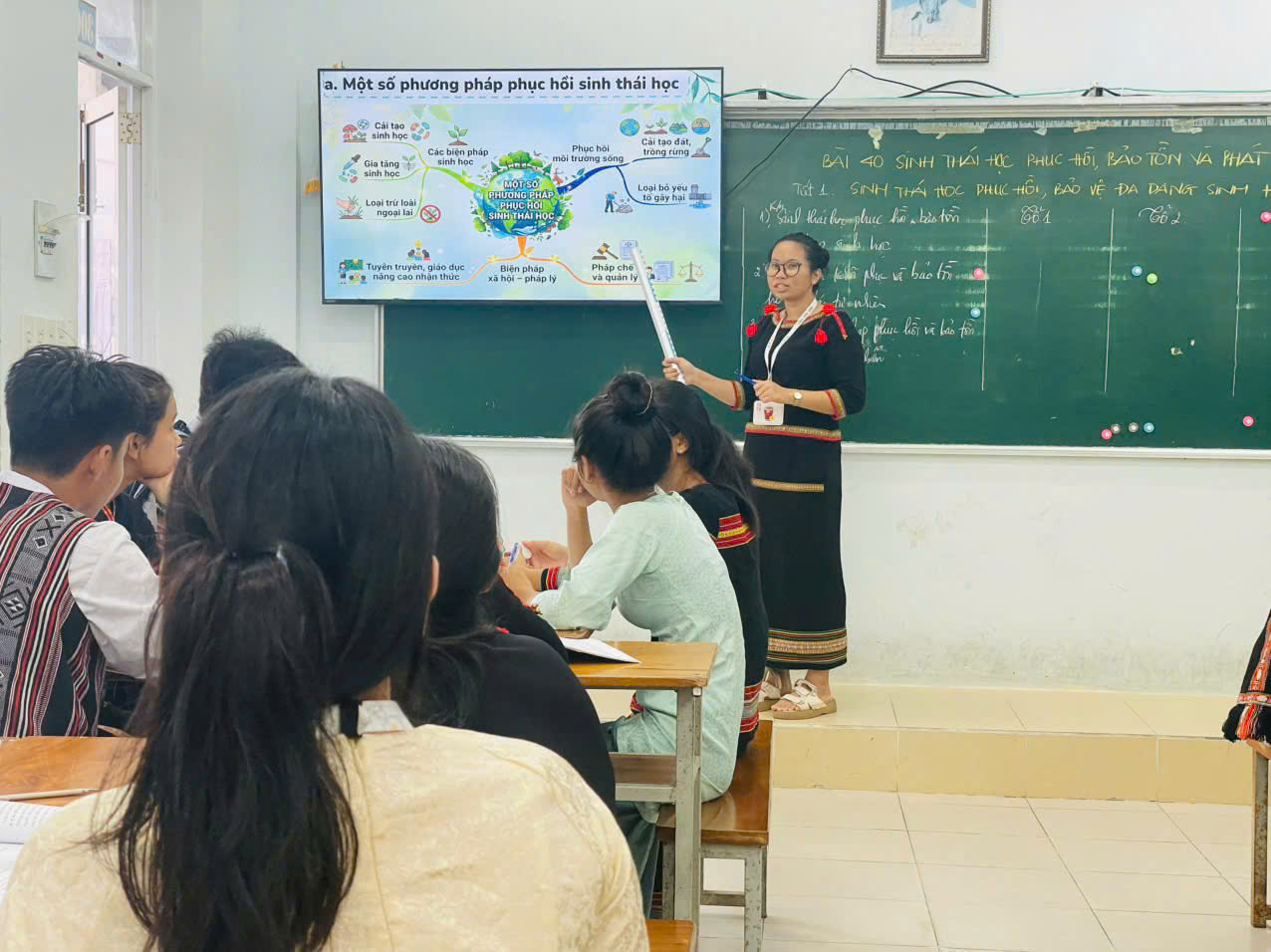
Learning opens the door of knowledge for ethnic minority pupils and students to access high-quality labor market
The review findings serve as a solid scientific and practical foundation to advise competent authorities on refining mechanisms and policies toward consistency and synchronization, ensuring seamless connectivity from education and training to employment generation and the development of high-quality human resources in ethnic minority and mountainous regions in the new era.
This is a vivid testament affirming the profound, consistent concern and strategic vision of the Party and State for the future generation of brotherly ethnic groups across all regions of the Fatherland.
From a comprehensive institutional review...
The cause of comprehensive development in ethnic minority and mountainous regions has always held a particularly important strategic position in the revolutionary guidelines of our Party and State throughout various periods. In leadership thinking and national development orientations, the Party and State have consistently affirmed that education and training constitute the top national policy, and human resource development is the key driving force, in which the young generation of ethnic minorities plays the core role in building the homeland, consolidating the great national unity bloc, and firmly safeguarding national defense and security in the frontier regions of the Fatherland.
In particular, at the meeting with outstanding ethnic minority pupils, students, and youth in 2025, General Secretary Tô Lâm emphasized the requirement to continue caring for, nurturing, and fundamentally reforming policies for the ethnic minority youth.
Implementing Notice No. 475-TB/VPTW dated December 31, 2025 of the Office of the Central Committee of the Communist Party of Vietnam regarding the Conclusions of the General Secretary, as well as the assignment directives of the Prime Minister, the Ministry of Ethnic and Religious Affairs promptly took action with the highest sense of responsibility.
Review data indicates that the legal framework concerning ethnic minority children, pupils, students, and youth, as well as ethnic minority and mountainous regions, is currently structured into 10 major policy groups for learners, spanning from preschool education, general education, boarding schools, semi-boarding schools, and pre-university schools to vocational education, higher education, and preferential credit schemes. Policies on tuition fee exemptions and reductions, learning cost support, dining and accommodation subsidies, Vietnamese language enhancement for children prior to entering Grade One, and the preservation of ethnic minority scripts have brought into play profound humanitarian values, directly raising school enrollment rates, maintaining class attendance, and significantly curbing drop-out rates in remote villages.
Alongside the central legal framework, implementation across localities has recorded commendable proactiveness and flexibility. To date, 17 out of 34 provinces and cities have directly promulgated resolutions and specific policies funded by local budgets to provide additional living allowances, expand eligible beneficiaries, and take care of school meals for ethnic minority pupils and students.

At General Secretary Tô Lâm's meeting with outstanding ethnic minority pupils, students, and youth held in December 2025
Identifying gaps in connectivity
Alongside the achievements, the Review Report of the Ministry of Ethnic and Religious Affairs also pointed out bottlenecks and mechanism gaps impeding policy effectiveness. Among these, the most fundamental bottleneck is the disjointed synchronization and connectivity between the stages of training and labor utilization. The existing policy system, promulgated across multiple stages by different agencies, contains overlapping and fragmented eligibility criteria, leaning heavily toward short-term social welfare and subsidies without yet establishing a long-term value chain.
While many policies effectively support learners during general education, ethnic minority pupils face major obstacles regarding expenses and orientation when pursuing higher education or vocational training upon graduating from lower or upper secondary schools.
In particular, linkages among career orientation, vocational training, business partnerships, and on-site job placement for ethnic minority youth remain unsystematic. The nomination and admission policy and pre-university education have made notable contributions to building local cadres in recent times; however, the rate of graduates being assigned jobs matching their specialized training in certain localities remains modest, lacking a stable quota-based recruitment mechanism.
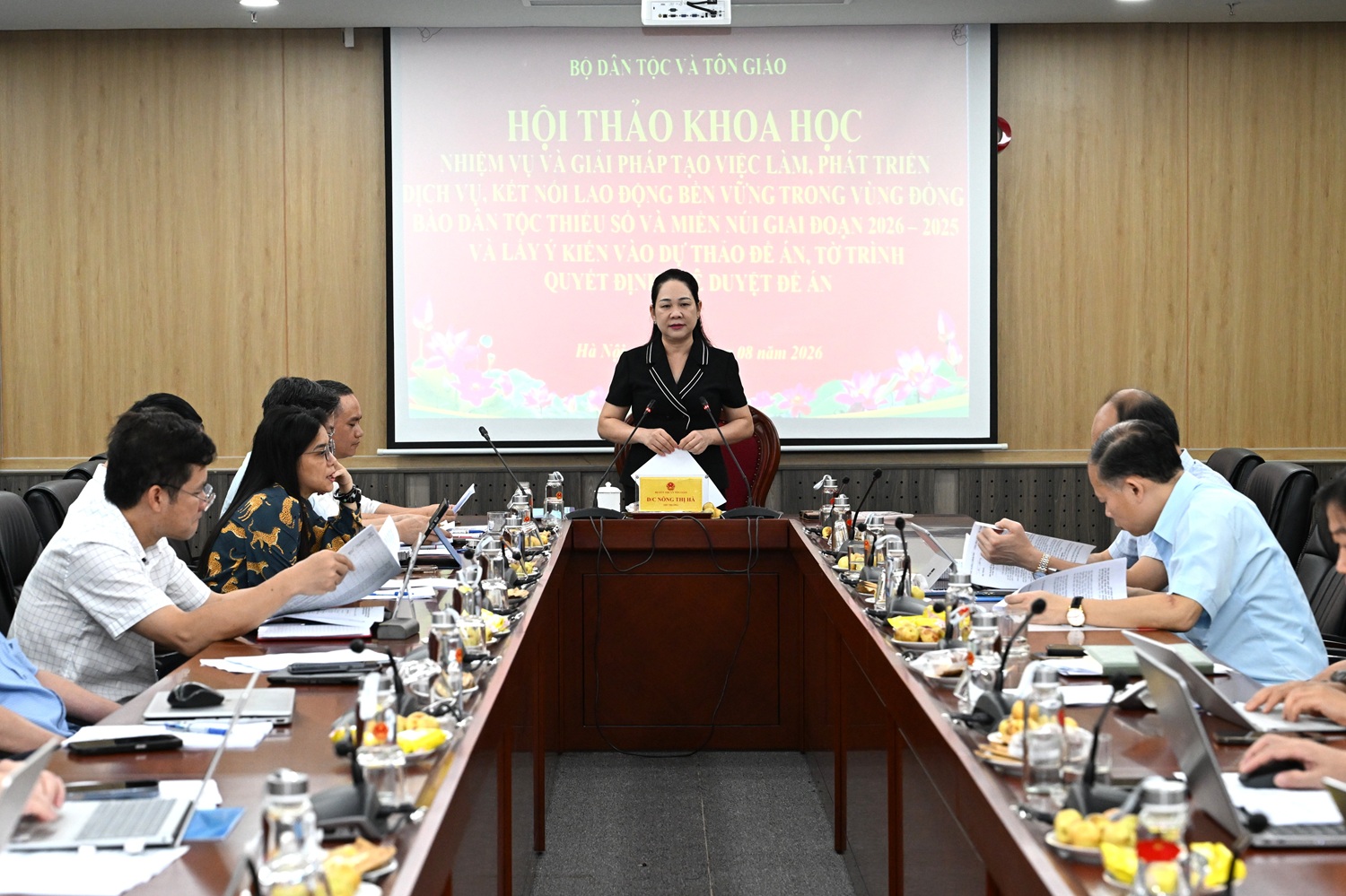
The Ministry of Ethnic and Religious Affairs currently implementing project on job creation, service development, and sustainable labor connectivity in ethnic minority and mountainous regions for the 2026-2035 period
A large proportion of ethnic minority youth, upon leaving school, lack specialized vocational skills, digital skills, and foreign languages, facing difficulties in accessing concessional capital for entrepreneurship. Moreover, support norms for meals, accommodation, and educational supplies promulgated years ago no longer match current price index fluctuations and actual living costs.
Toward building a seamless policy chain
From the aforementioned assessments, the Ministry of Ethnic and Religious Affairs affirms that the requirement for renewing policy-making mindsets for ethnic minority pupils, students, and youth in the 2026–2035 period is to shift decisively from the "support based on hardship" approach to the model of "comprehensive capacity development and cultivation of high-quality human resources."
Policy formulation must place ethnic minority learners and youth at the center, creating a closed-loop developmental continuum following the life cycle: beginning with preschool care and education, improving general education quality, providing career orientation, offering specialized undergraduate and postgraduate training, to ensuring job placement, start-up credit, and attracting and employing talents.
On the basis of this principle, the Ministry of Ethnic and Religious Affairs has advised and proposed strategic solution packages, including: Formulating targeted scholarship policies and study support packages for ethnic minority students residing in Zone III communes, extremely disadvantaged villages, and land border communes when attending universities nationwide; Proposing a comprehensive program for developing high-quality human resources and young ethnic minority talents, harmonized from the stages of discovery, selection, talent scholarship awards to postgraduate training at research institutes and universities, coupled with appropriate recruitment and remuneration policies to attract young intellectuals back to serve their localities; Designing policies supporting seamless transitions from training to employment and entrepreneurship for ethnic minority youth; Perfecting inter-agency coordination mechanisms and developing a synchronized digital data axis on ethnic minority pupils, students, and youth to serve as a digital foundation for administration, budget allocation, and the monitoring and assessment of policy impacts based on substantive outcomes.
Furthermore, the Ministry recommends that the National Assembly prioritize commensurate budget allocations for education and training, reserving adequate capital resources for extremely disadvantaged and border areas. The Ministry also recommends that the Government direct relevant ministries and sectors to coordinate closely with the Ministry of Ethnic and Religious Affairs in researching, revising, and issuing new decrees; completing the network planning of boarding and semi-boarding schools; and piloting the "Socialist school" model at Viet Bac Highland High School.
These sound, dedicated proposals stemming from grassroots realities once again reaffirm the deep, responsible, and consistent care of the Party and State for ethnic minority children. Perfecting education, training, and young human resource development policies for ethnic minorities not only broadens opportunities for self-improvement and career establishment for youths in highland and border regions, but also builds an enduring endogenous human resource foundation for ethnic minority and mountainous regions to make breakthroughs and stride forward steadily alongside the entire nation into the new era.
Thuần Linh
THỐNG KÊ TRUY CẬP
Số lượt truy cập hiện tại: 19
Tổng số truy cập: