

Scientific conference “100 Years of Caodai - Contributions to the country and orientations for a new century” holds in Vinh Long
10:06 PM 17/11/2026 Views: 11 PrintA scientific conference titled “100 Years of Caodai - Contributions to the country and orientations for a new century” was held at the Chau Minh Holy See of the Tien Thien (Ante-Creation) Caodai Church in Tien Thuy commune, Vinh Long province, on November 15. Vice Chairman of the Government Committee for Religious Affairs under the Ministry of Ethnic and Religious Affairs Nguyễn Tiến Trọng attended the event.

Delegates chair the conference
The conference was also attended by Director of the provincial Department of Ethnic and Religious Affairs Thạch Thị Thu Hà; Vice Chairwoman of the provincial Vietnam Fatherland Front Committee Nguyễn Thị Hồng Nhung,; leaders of the Institute of Ethnology and Religious Studies (Vietnam Academy of Social Sciences); leaders and heads of divisions of the Vinh Long Department of Ethnic and Religious Affairs; experts, scientists and researchers in ethnic, religious and belief affairs; and representatives of Vinh Long’s departments and agencies.
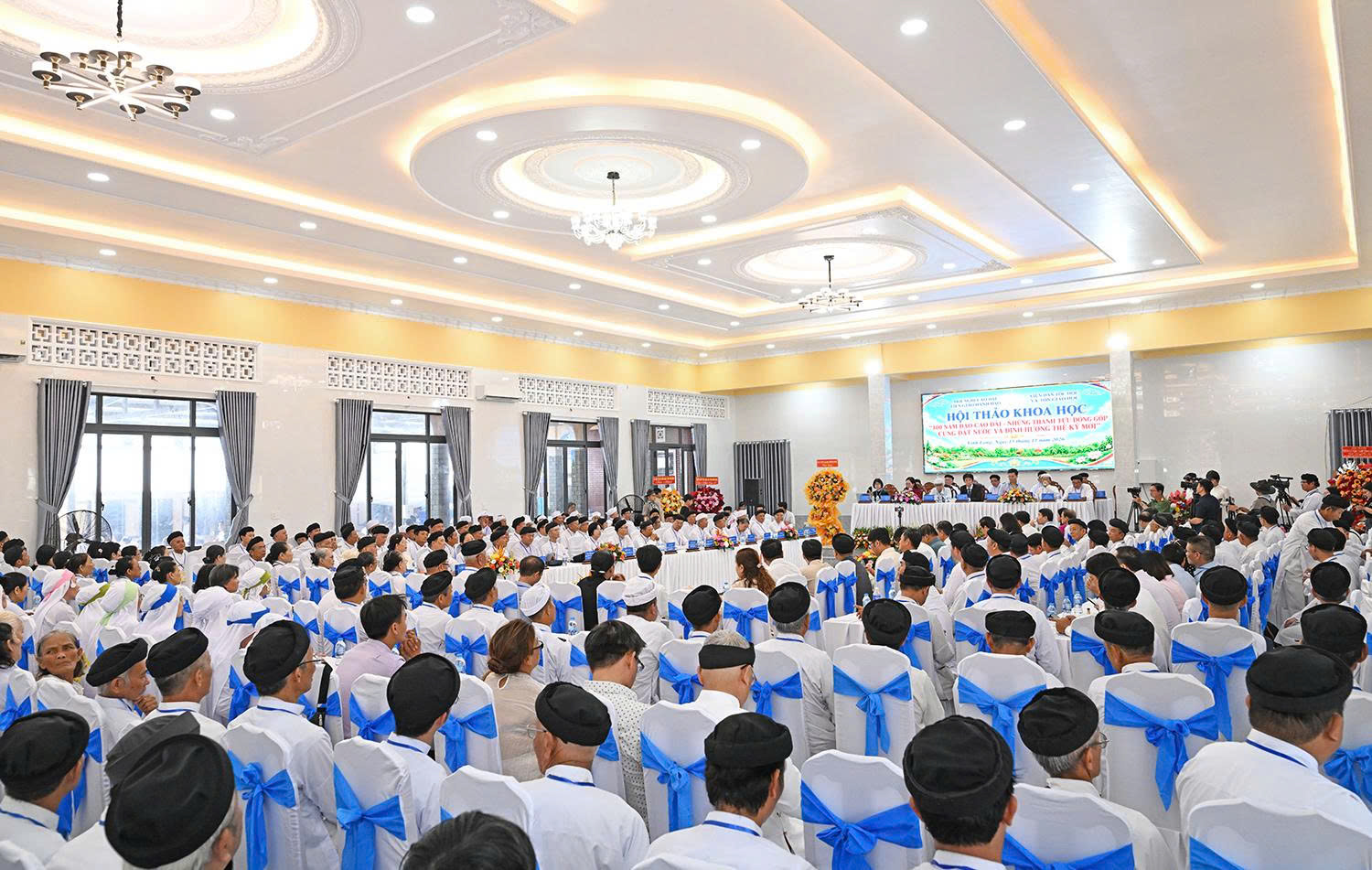
An overview of the conference
Representing the Caodai churches were Archbishop Thượng Phong Thanh, Chairman of the Standing Committee of the Tien Thien Caodai Church and Head of the Organizing Committee; and Cardinal Thái Tăng Tinh, Chairman of the Standing Committee of the Minh Chon Dao Caodai Church, together with dignitaries and sub-dignitaries of Caodai churches and organizations.
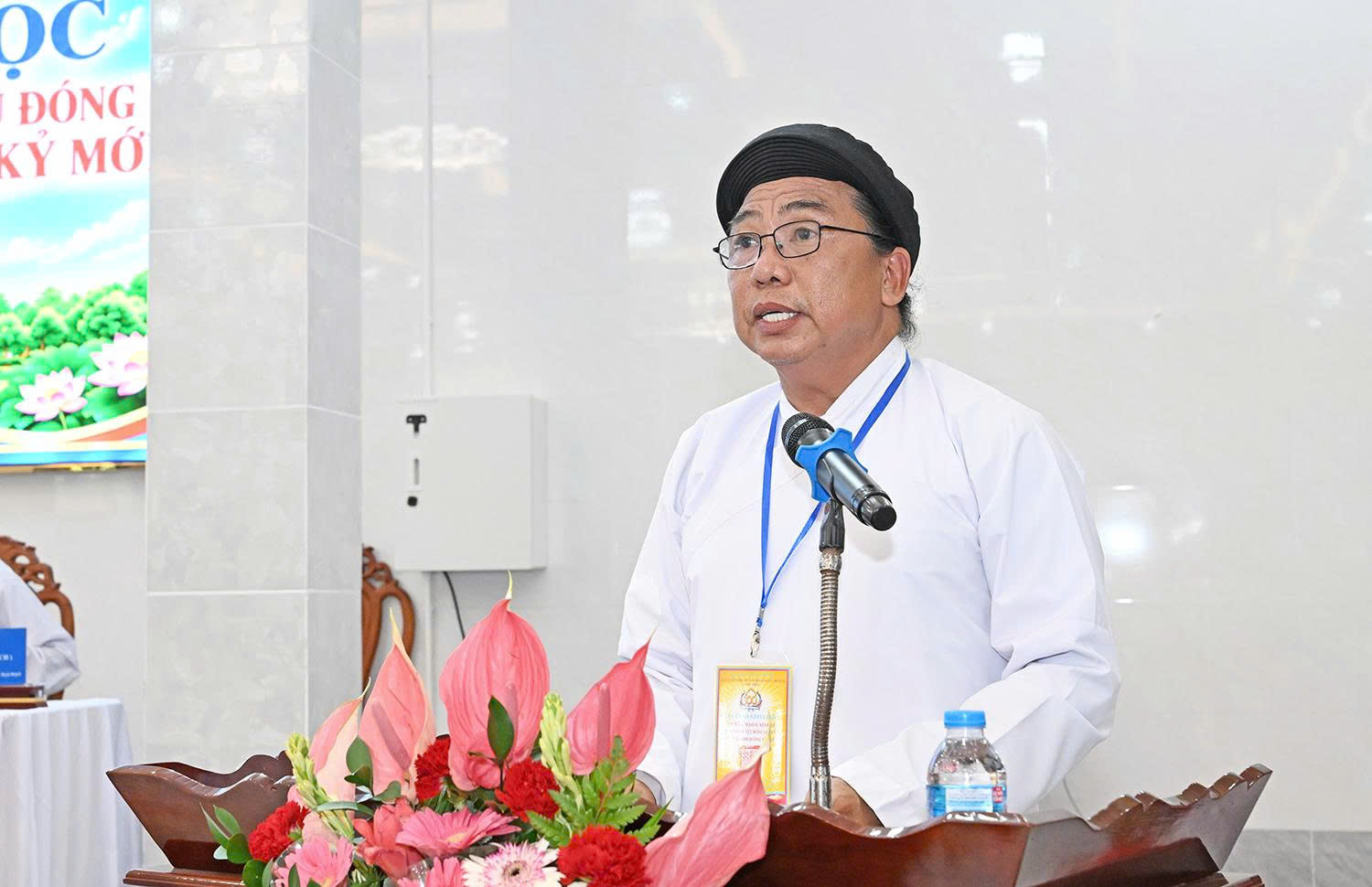
Archbishop Thượng Phong Thanh delivers the opening speech at the conference
In his opening remarks, Archbishop Thượng Phong Thanh said that through many historical changes, Caodai churches, organizations and followers have continuously maintained their religious life, practiced moral values, developed religious activities and cared for the community, society and the country. Looking back on the past century, he said that alongside pride, the journey should be reviewed in a scientific, objective and responsible spirit, because “history is not only to be remembered but also to be understood; tradition is not only to be honored but also to be inherited and developed.”
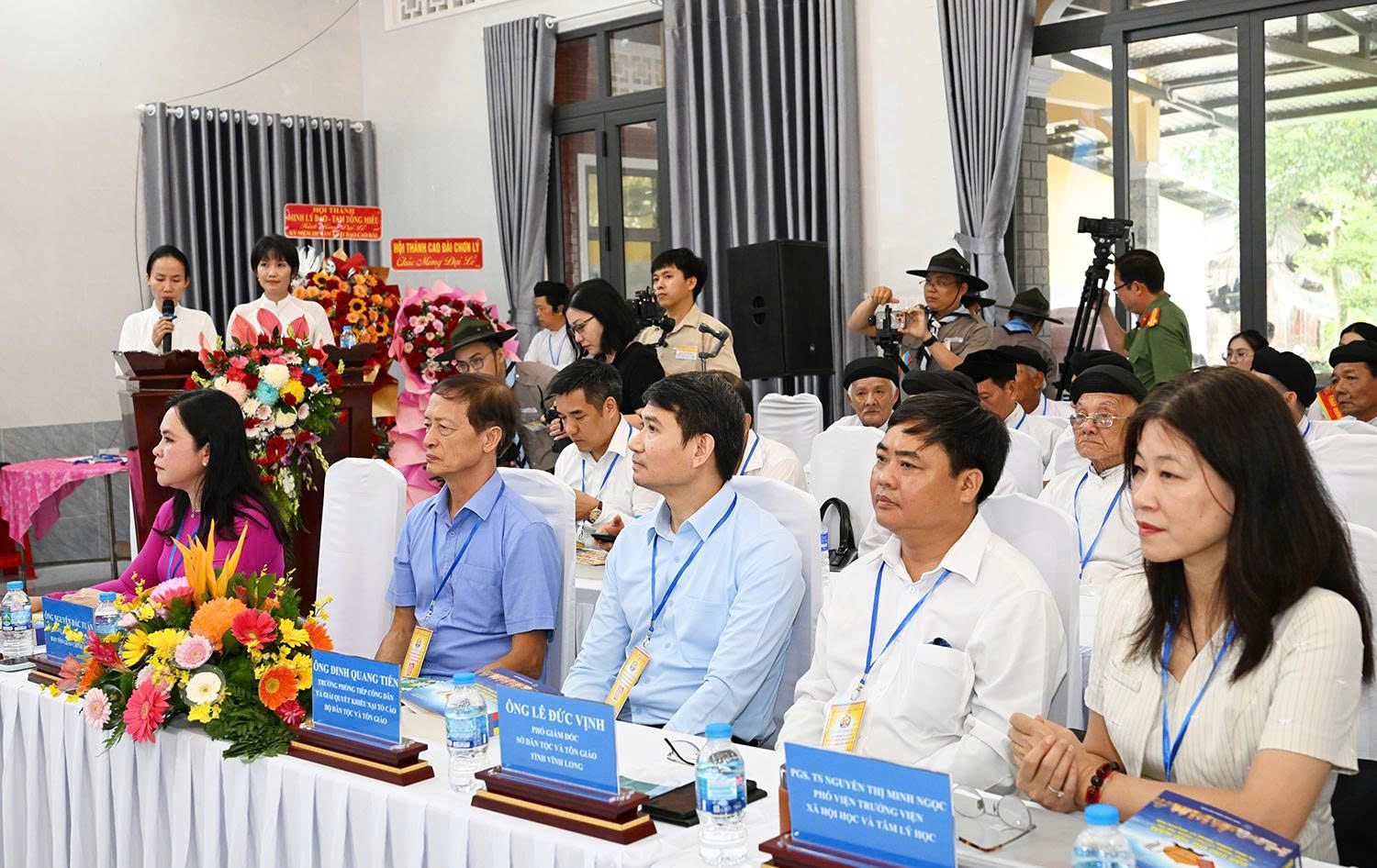
Managers, experts and scientists from the Ministry of Ethnic and Religious Affairs, the Vinh Long Department of Ethnic and Religious Affairs and research institutions on ethnic and religious affairs attend the conference
The conference aimed to review and summarize the formation and development of Caodai over the past 100 years, and to clarify its historical, ideological, cultural and moral values and its contributions to building, defending and developing the country. It also served as a forum for academic dialogue among scientists, researchers, management agencies and representatives of Caodai churches and organizations, helping to enrich documentation, broaden understanding and deepen research on Caodai. Based on past achievements and experience, the conference proposed development orientations for the coming period, with a focus on preserving and promoting cultural and belief values, civic responsibility and the ability to adapt to changes in contemporary society.
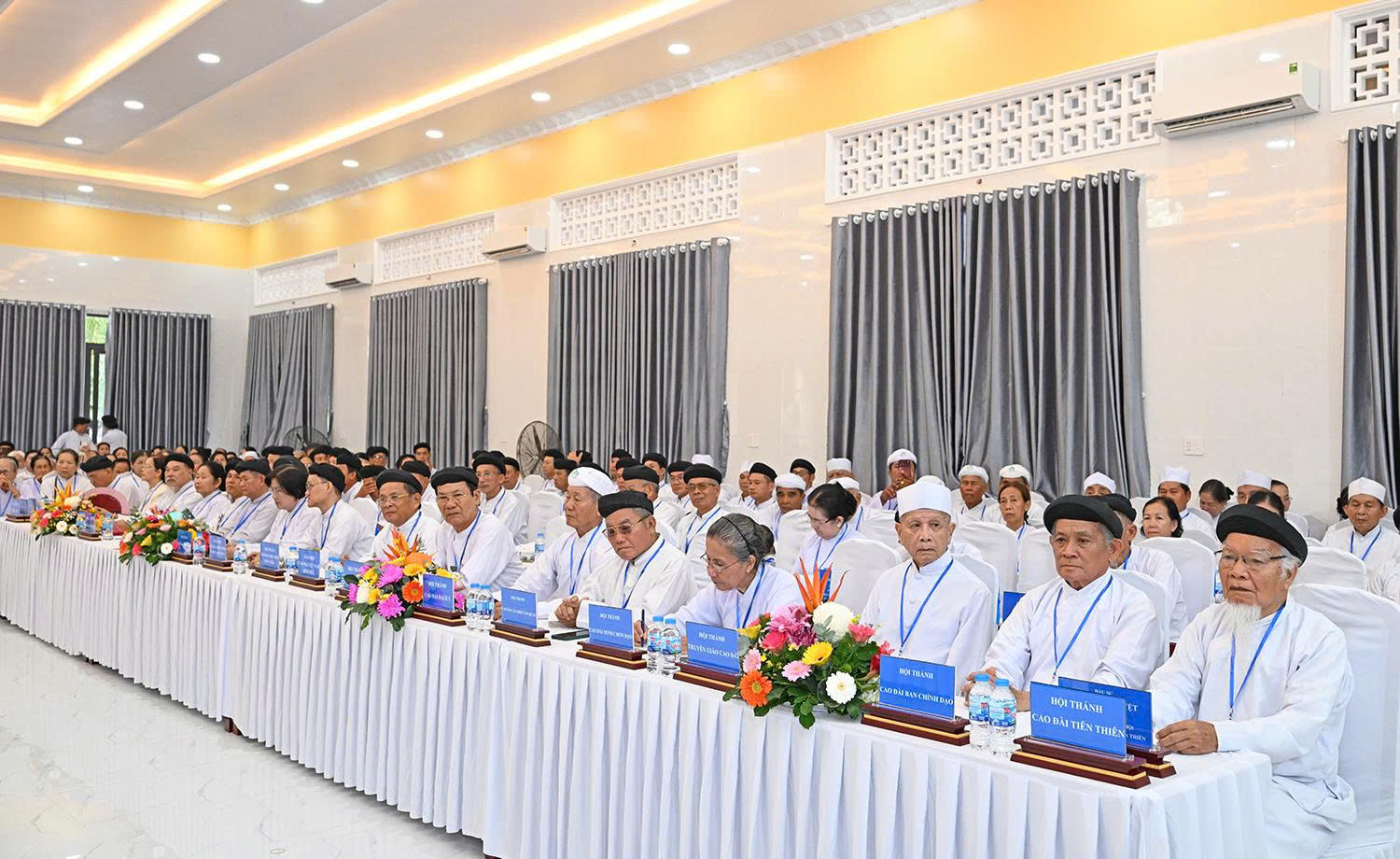
Delegates attend the conference
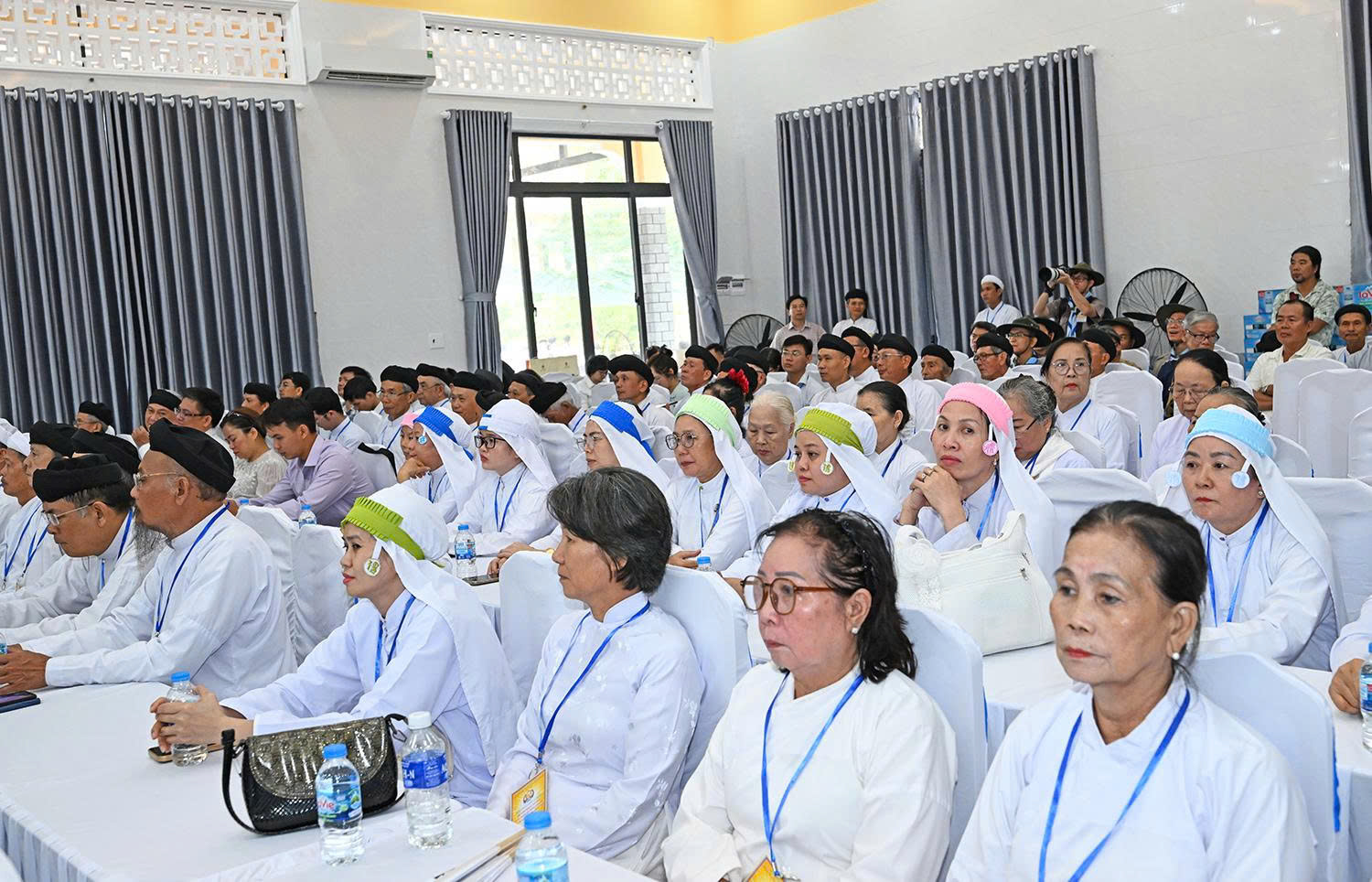
Delegates attend the conference
The conference had two sessions. The first session focused on the history, development and orientations of Caodai in the new era, under two themes: the birth and development of the religion, and its development trends as the country pursues renewal. The second session discussed Caodai in relation to national identity and culture, centering on the relationship between Caodai and culture, and between Caodai and the nation.
The Organizing Committee received 85 presentations from scientists, managers and dignitaries of Caodai churches and organizations. The presentations covered four themes: the birth and development of Caodai; Caodai and culture; Caodai and the nation; and national renewal and the trends of Caodai.
At the conference, delegates clarified the context in which Caodai was born and how it developed; the role of dignitaries and followers in different periods of national history; and the cultural and moral values of Caodai in social life. Many papers also discussed new issues such as digital transformation, environmental protection, the training of sub-dignitaries and the internationalization of Caodai in the new century.
Over its century-long journey, Caodai has contributed by nurturing a religious way of life. Its teachings on self-cultivation, compassion, honesty, filial piety, righteousness and responsibility toward others are conveyed through scriptures, religious activities and family life.
Caodai has also enriched Vietnam’s cultural heritage. The architecture of its temples (thánh thất) and meditation houses (thánh tịnh), together with its symbols, scriptures, rituals and ritual music, carries both religious features and a strong imprint of Southern culture. Through poetry, music and familiar language, Caodai teachings have become part of local people’s lives. Places of worship also preserve scriptures, religious history and the memories of many generations. Preserving this heritage therefore matters not only to followers but also to research on national culture.
The religion’s close bond with the country is also reflected in the lives and activities of many dignitaries and followers in specific historical contexts. Patriotism, awareness of one’s roots, the desire for peace and responsibility toward fellow citizens are key topics in studying the relationship between religious life and national life.
Besides history and culture, the conference also addressed the passing of values between generations, education, environmental protection, climate change response and sustainable development. Participants also examined the opportunities and challenges facing Caodai in the digital era, state management in the context of digital transformation, and the need to train sub-dignitaries at the grassroots level.
The conference helped clarify the historical, cultural and moral values of Caodai and its contributions to the country. The scientific discussions also suggested ways to inherit and promote the legacy of previous generations, link the preservation of religious identity with social responsibility, and continue to nurture the tradition of solidarity, standing with the nation in a new century of development.
Hương Huyền
THỐNG KÊ TRUY CẬP
Số lượt truy cập hiện tại: 33
Tổng số truy cập: