

Phuc Luc Ngoat Festival at Yen Luong Temple: sacred stream in heart of coastal urban area of Cua Lo
06:58 PM 12/08/2026 Views: 135 PrintMentioning the coastal area of Cua Lo in Nghe An Province, people immediately think of a vibrant tourist urban lifestyle. Alongside this modernity, however, Cua Lo preserves the profound cultural and religious values of an ancient fishing village. Situated in the center of Cua Lo Ward, the time-honored Yen Luong Temple and its traditional Phuc Luc Ngoat Festival have served for generations as an enduring spiritual emblem - a steadfast pillar of mental and emotional strength guiding generations of coastal fishermen of the Nghe region to brave the perilous waves, head offshore, hold fast to their fishing grounds, and build prosperity for their homeland.
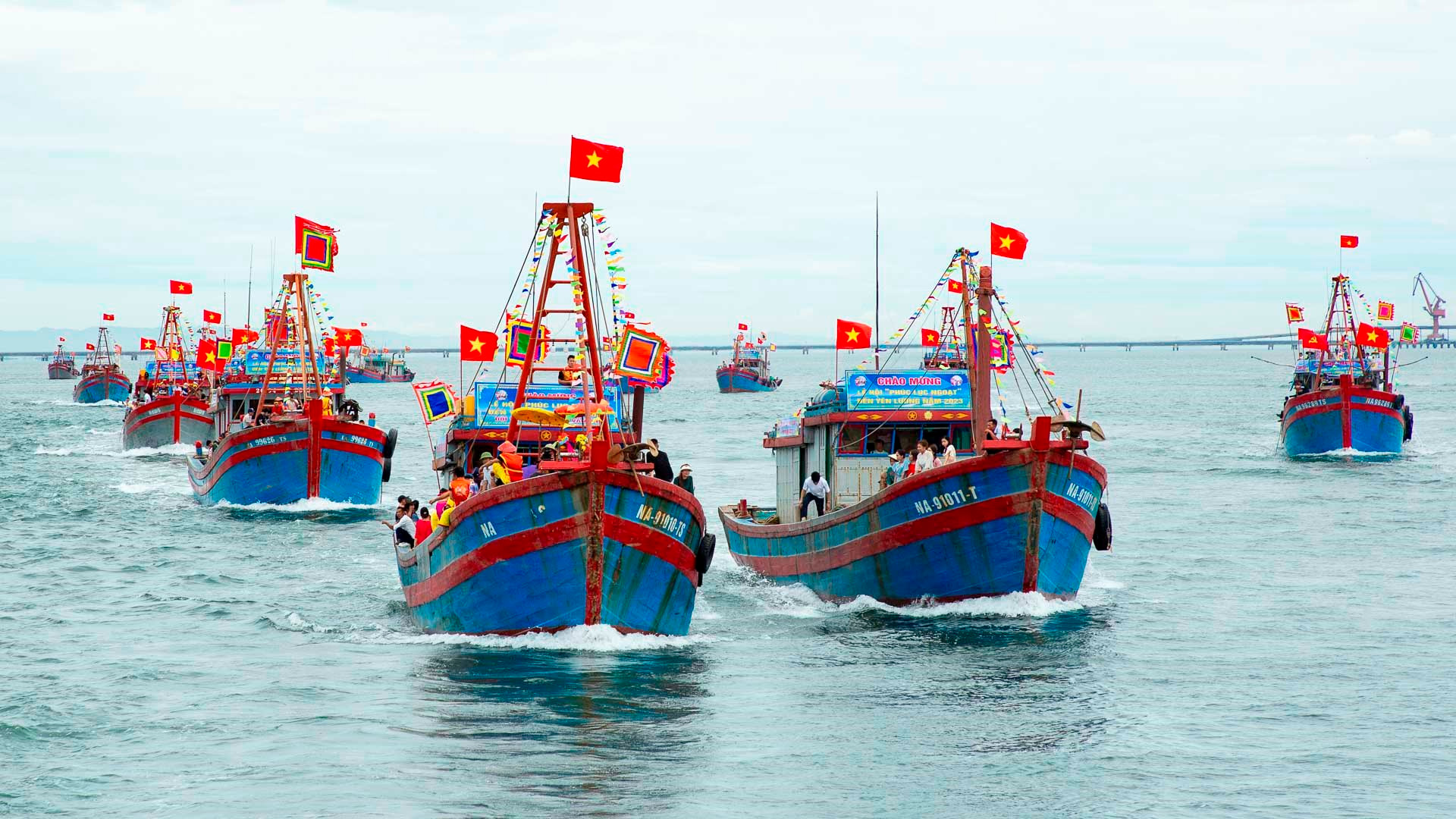
Fishing boats take part in Vong Nghinh (Offshore Deities Welcoming) Ceremony during Phuc Luc Ngoat Festival
Ancient temple of coastal inhabitants
Yen Luong Temple was first established during the Later Lê Dynasty in the Year of the Dog (1682), in the third year of the Chinh Hoa reign under King Lê Hy Tông. Weathering nearly 350 years of sun, rain, and the vicissitudes of time, the temple has preserved virtually intact its imposing scale and traditional artistic architecture. The monumental complex is arranged in a symmetrical, dignified layout comprising: the Nghi Mon Gate (Main Gate), elephant pavilion, horse pavilion, Lower Sanctuary, Middle Sanctuary, and Upper Sanctuary. Located in an area shaded by centuries-old trees and situated not far from the fishing wharf, Yen Luong Temple serves as the essential socio-spiritual and cultural institution of ancient Nghi Thuy fishing village - the renowned cradle of both nearshore and offshore fishing in the Nghe coastal region.
The inherent perils and precariousness of making a livelihood in the open sea have fostered among Yen Luong's residents a deep-seated worship of marine deities. In the spiritual consciousness of local fishermen, the Four Holy Mothers hold a paramount position in offering protection from storms and bestowing favorable winds and smooth sailing upon their voyages. The sacred incense ash and burner dedicated to the Four Holy Mothers were ceremonially brought directly from the revered Con Temple in the Quynh Phuong area (now Quynh Mai Ward following administrative reorganization).
In addition, the temple co-worships the Local Tutelary Deity, the Budha, Mountain Deities, the God of Agriculture (Shennong), the Whale God (Ca Ong / Ngu Ong), and the Mountain Deity of Lan Chau Island. This multifaceted pantheon reflects a harmonious confluence of Mother Goddess worship, Buddhism, and the reverence of water and earth deities, vividly depicting the humanist world outlook of the coastal population.
Throughout the life cycle of every Yen Luong fishing village resident, spiritual life is deeply intertwined with the sacred precinct of the temple. The temple is not merely a sanctuary for spiritual devotion, but also a communal cultural gathering place that fosters the tradition of "remembering the source when drinking water" and cements village solidarity. Annually, the historic site regularly hosts two major ceremonial periods along with spiritual activities following the seasonal rhythms of marine fishing.
The first major ritual is the Ky Yen Ceremony (Peace-praying Ceremony) celebrated around the 15th day of the second lunar month, intended to pray for early-spring peace and ward off misfortune and disaster. This marks the time when boat owners and fishing crews initiate their new seafaring season, coming together to offer incense to pray for peaceful skies, calm waters, national peace and public prosperity, safe ocean voyages, and abundant seafood harvests.
The second major celebration and the grandest annual event is the Phuc Luc Ngoat Festival celebrated in mid-sixth lunar month to express gratitude to the deities for protecting and sheltering the village throughout half a year of wind and rain. Furthermore, on the 1st and 15th days of the lunar month, during the Upper, Middle, and Lower Full Moon festivals or prior to building a new boat or launching out to sea, fishermen assemble at the temple to present offerings, displaying their devout hearts and praying for safety across the boundless ocean.
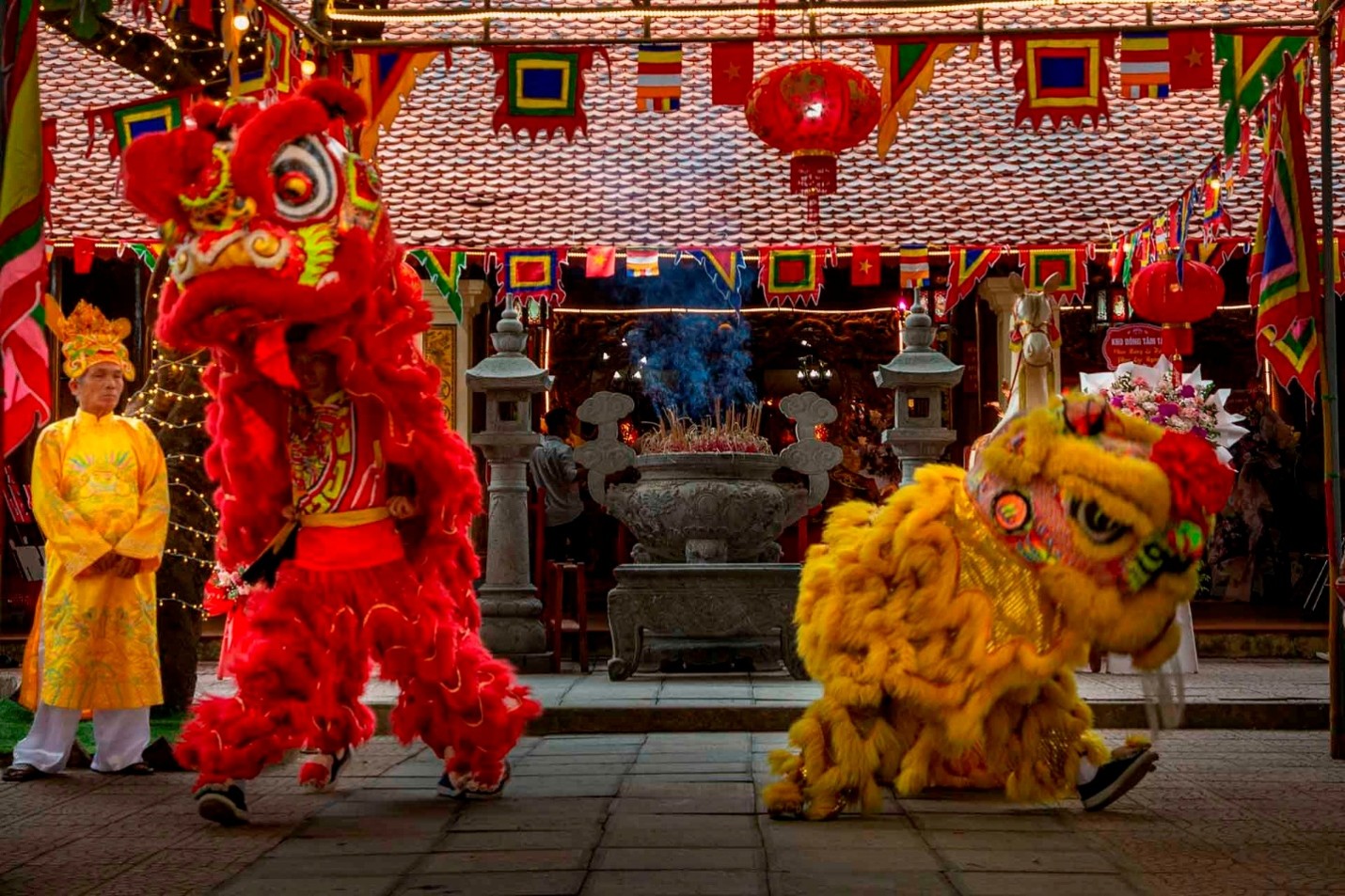
Forecourt of main worship sanctuary at Yen Luong Temple
Phuc Luc Ngoat Festival: cultural hallmark of Cua Lo coastal community
The name Phuc Luc Ngoạt originates from its sacred meaning: a festival to pray for blessings (phuc) in the sixth lunar month (luc ngoat). The festival boasts a history spanning approximately 400 to 500 years, inextricably linked to the collective memory of a period when the villagers suffered ceaseless squalls and storms, prompting them to dispatch envoys to bring sacred incense from Con Temple back to build a sanctuary for worship, after which peace and tranquility returned to their lives.
Weathering numerous historical changes, the festival was systematically revived by local authorities in 2007. Following ancient customs, once every three years in the cyclical years of the Rat, Horse, Cat, and Rooster, Yen Luong village organizes the Grand Phuc Luc Ngoat Festival from the 14th to the 16th day of the sixth lunar month. Acknowledging its distinctive historical values and unique cultural identity, the Ministry of Culture, Sports and Tourism officially inscribed the festival on the National Intangible Cultural Heritage list in November 2023.
The ceremonial component of Phuc Luc Ngoat is conducted through a sequence of solemn, rigorous traditional rituals, beginning with the Opening Ritual to purify the sacred space and request divine permission from the pantheon of gods to inaugurate the festival.
One of the most unique and delicate traditional customs of the festival is the practice of pounding sticky rice offering cakes. The villagers select sturdy, healthy young men to pound the glutinous rice into a smooth, malleable texture; skilled women then use molds crafted from fresh banana stems to compress and shape fragrant, chewy conical rice cakes to present as sacred offerings to the deities.
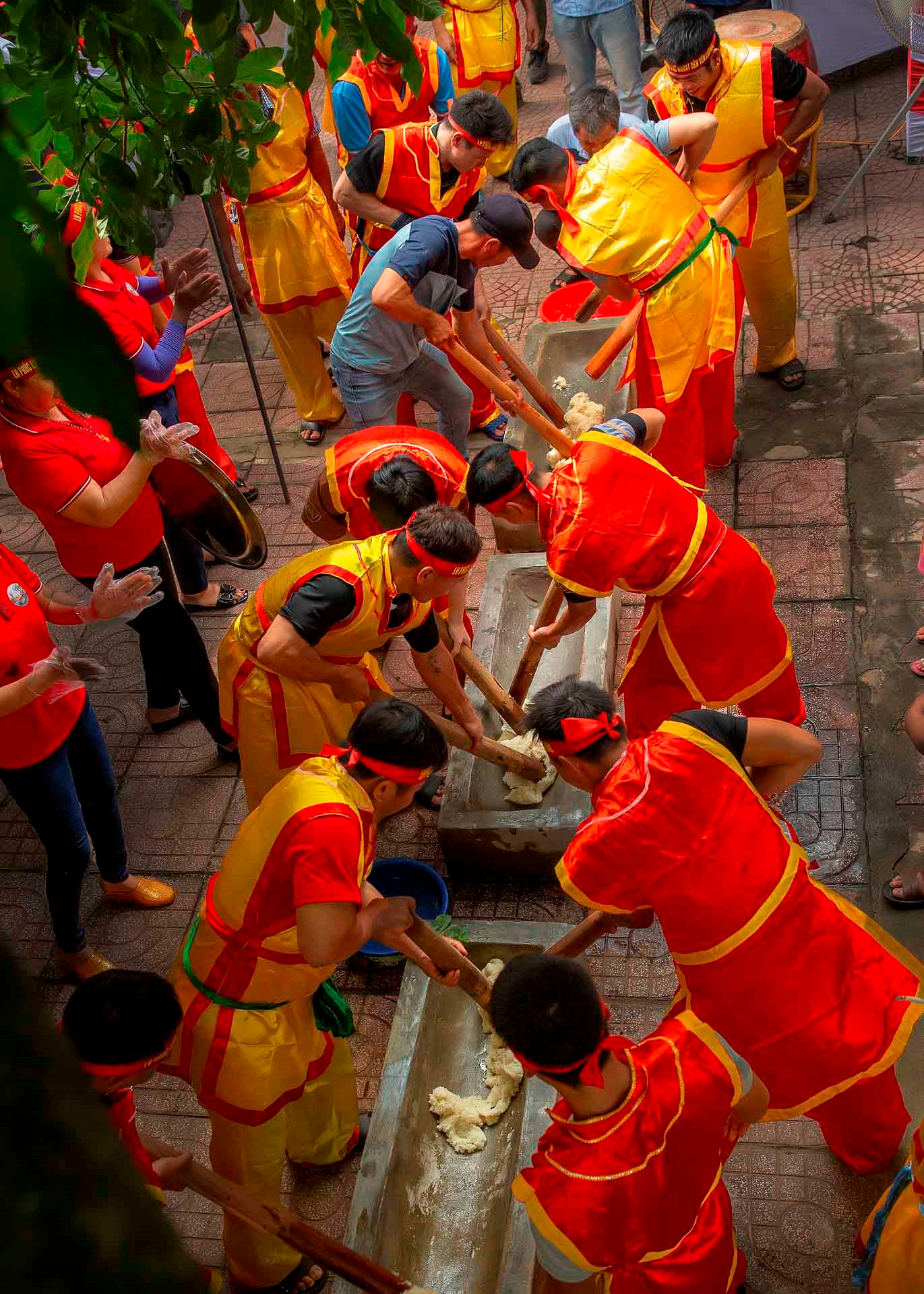
Men participate in pounding sticky rice offering cakes during Yen Luong Temple Festival
The soul of the festival is the Vong Nghinh Ceremony (Offshore Deities Welcoming Ceremony) performed on the sea in combination with an overland palanquin procession. In the early morning of the main festival day, a flotilla of dozens of large-capacity fishing vessels, resplendently adorned with the National Flags and vibrant festival banners, cuts through the waves in succession to head out to sea approximately two kilometers offshore, facing toward the sacred cradle of Con Temple.
Amidst the expanse of ocean waves, accompanied by the urgent beat of festival drums and exhilarating lion, monk, and dragon dances performed right upon the ship's prow, the Chief Celebrant recites invocation prayers and presents offerings of fresh fruits, rice, ceremonial wine, and votive paper, reverently inviting the marine deities to manifest at the temple and bear witness to the people’s sincerity.
When the flotilla docks, the spirit tablets and sacred emblems of the deities are solemnly transferred to sedan chairs for an overland procession through city streets, escorted by hundreds of electric shuttles alongside crowds of local residents and pilgrims from across the country.
Parallel to the Vong Nghinh Ceremony is the Ca Ong (Whale God) Worship Ritual which the supreme water-deity worship custom of seafarers structured into three distinct phases: the Whale God Welcoming Rite, the Prior Sages Commemoration Rite, and the Main Sacrificial Ceremony. Every vessel owner in the village prepares a separate offering tray on their own boat to join in unison in thanksgiving. The grand ceremonial cycle concludes with the Grand Sacrificial Ceremony observed strictly according to formal court rituals, followed by the Thanksgiving Ceremony that safely concludes the festival.
Harmonizing with the sacredness of the ceremonial rites is the lively festive section, bursting with vibrant coastal colors. Enthusiastic folk athletic games such as tug-of-war, volleyball, rapid net-weaving contests, and red-whiskered bulbul singing competitions, together with the sweet, soulful melodies of Nghe Tinh vi and giam folk songs, resonate across the village festival nights.
The seamless synthesis of mystical spiritual rites and jubilant public festivities makes Phuc Luc Ngoat an enduring bond of community solidarity, reaffirming the enduring vitality of marine cultural heritage while opening distinctive prospects for heritage-based tourism in today's coastal urban area of Cua Lo.
Thuần Linh
THỐNG KÊ TRUY CẬP
Số lượt truy cập hiện tại: 47
Tổng số truy cập: