

Khanh Hoa province lays foundations for sustainable development in ethnic minority areas
11:42 PM 20/08/2026 Views: 84 PrintBy carrying out ethnic policies in a coordinated way, caring for social welfare, investing in infrastructure, developing livelihoods and preserving culture, the south-central province of Khanh Hoa is gradually improving the lives of ethnic minority people.
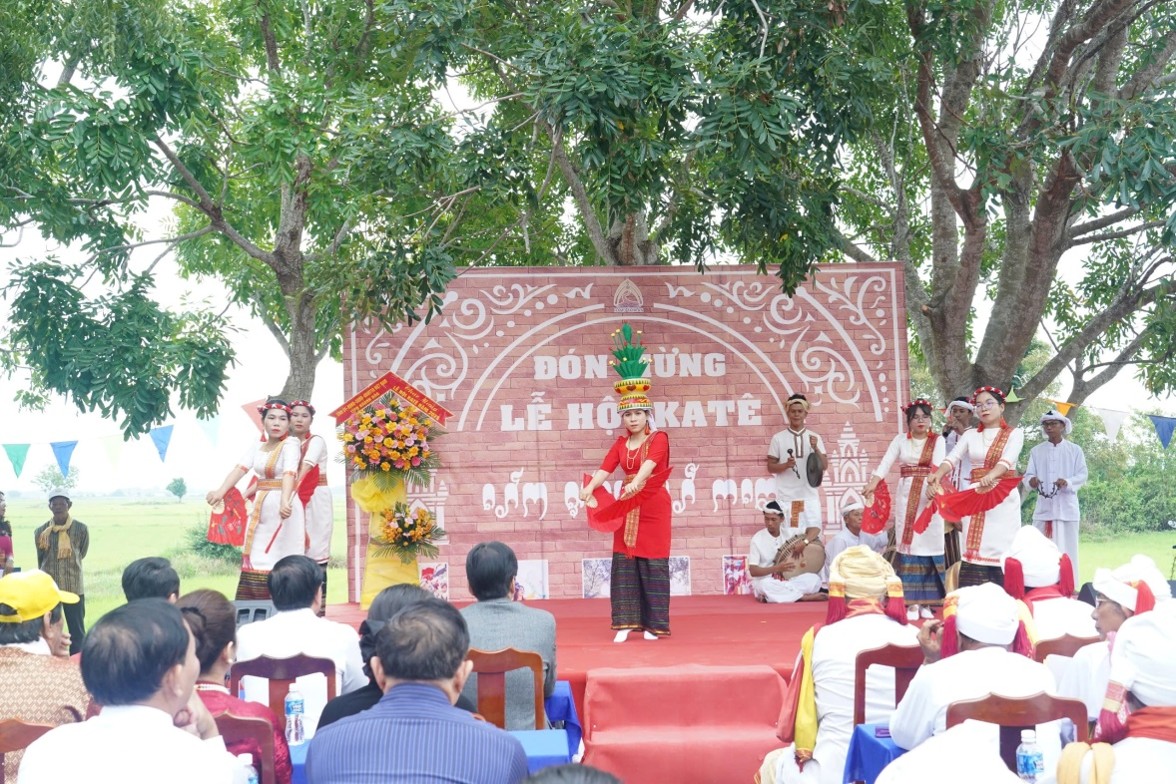
The Kate Festival at Po Inu Nagar Temple in Khanh Hoa province
Khanh Hoa province is home to 34 ethnic minority groups with 266,284 people, acounting for 11.79 percent of the provincial population. The Raglai and Chăm are the largest groups. The province has 28 communes and wards and 224 villages in ethnic minority and mountainous areas, including 108 villages facing extreme difficulties.
Over the past years, local authorities has integrated national target programs with policies on social welfare, education, healthcare, production support and cultural preservation. These efforts have gradually improved infrastructure, livelihoods and people's access to social services, better meeting their needs in daily life, education, healthcare, production and economic development.
Effective implementation of development programs for ethnic minority and mountainous areas
Under close leadership and direction of local authorities at all levels, and the consensus and efforts of local people, ethnic programs and social welfare policies in Khanh Hoa province’s ethnic minority and mountainous areas have achieved many positive results.
According to results for the 2021–2025 period released by the province, the average income of ethnic minority people reached about VND 34 million (US$1,300) per person per year, more than double the 2020 level. The poverty rate fell by an average of 6 percent a year. However, infrastructure in some areas still does not meet development needs. Some ethnic minority people still face hardship, and access to public services and the use of economic potential remain uneven.
In the first six months of 2026, health insurance coverage among ethnic minority people in the province reached 100 percent. Preschool children in ethnic minority and mountainous areas received lunch support of VND 330,000 per child per month. The province also held 21 conferences to raise awareness of and disseminate the law, attracting more than 3,120 participants.
The province attaches importance to the role of prestigious people in encouraging residents to develop production, preserve their cultural identity and maintain security and order. On the occasion of the 2026 Lunar New Year (Year of the Horse) and the Ramưwan Festival, the province visited and presented gifts to 190 prestigious people and 28 prestigious people in three communes in ethnic minority areas.
Besides, cultural preservation is also receiving growing attention, linked with digital transformation and tourism development. The Cham Cultural Heritage Digital Platform was launched on June 27. The platform aims to digitize documents, artifacts, relics, festivals and intangible cultural values, and build a database for research, management, conservation, heritage promotion and smart tourism development.
Toward comprehensive and sustainable development
However, Khánh Hòa still faces many challenges. A report for the first half of the year pointed out that poverty reduction in ethnic minority and mountainous areas is not yet truly sustainable. The risk of falling back into poverty remains high because livelihoods depend heavily on agriculture. After the reorganization of administrative units, most commune-level officials in charge of ethnic affairs also hold other posts, while local management demands keep rising.
In the coming time, the province aims for comprehensive and sustainable development in ethnic minority areas, gradually narrowing gaps in living standards, income and development compared with the provincial average. The focus is on improving the quality of human resources, preserving cultural identity, strengthening the grassroots political system, reinforcing great national unity and maintaining national defense and security.
By 2030, Khanh Hoa province strives to raise the average income of ethnic minority people to half of the national average. It aims to have basically no communes or villages facing extreme difficulties. All communes in ethnic minority and mountainous areas meeting new-style rural area standards, and the multidimensional poverty rate cut to below 10 percent. The province also targets more than 85 percent of villages and communes having essential infrastructure that meets development and daily-life needs. It plans to basically resolve shortages of residential land, housing, farmland and clean water in line with approved plans.
In addition, the province aims for 40 percent of ethnic minority workers to have skills in industry, small-scale industry and handicrafts, tourism and services, and for 80 percent of ethnic minority farming households to engage in commercial agriculture and forestry. To reach these goals, vocational training must be linked to market demand and job prospects after training. Access to preferential credit should also be expanded, along with support for young entrepreneurs and the development of household and community economies.
Khanh Hoa province is gradually shaping a more comprehensive approach to ethnic affairs. It puts people at the center, uses real benefits to beneficiaries as the yardstick, and links development investment with cultural preservation. When resources are allocated on time, policies are tailored to local conditions and people take an active part, the goal of narrowing the development gap in ethnic minority areas will have a firmer foundation to become reality.
Hương Huyền
THỐNG KÊ TRUY CẬP
Số lượt truy cập hiện tại: 41
Tổng số truy cập: