

Buddhism in Nghe An province promotes unity and accompanies homeland development
11:02 PM 30/07/2026 Views: 102 PrintBuddhism took root in Nghe An province early in the nation’s history and has developed steadily through the ages. Closely tied to people’s lives, it has helped nurture the tradition of patriotism and the spirit of unity, living a good life, both secular and religious. As the country enters a new era of development and deeper international integration, with a focus on fast and sustainable growth, Buddhism in the province continues to accompany the nation and actively contribute to building and defending the Fatherland.
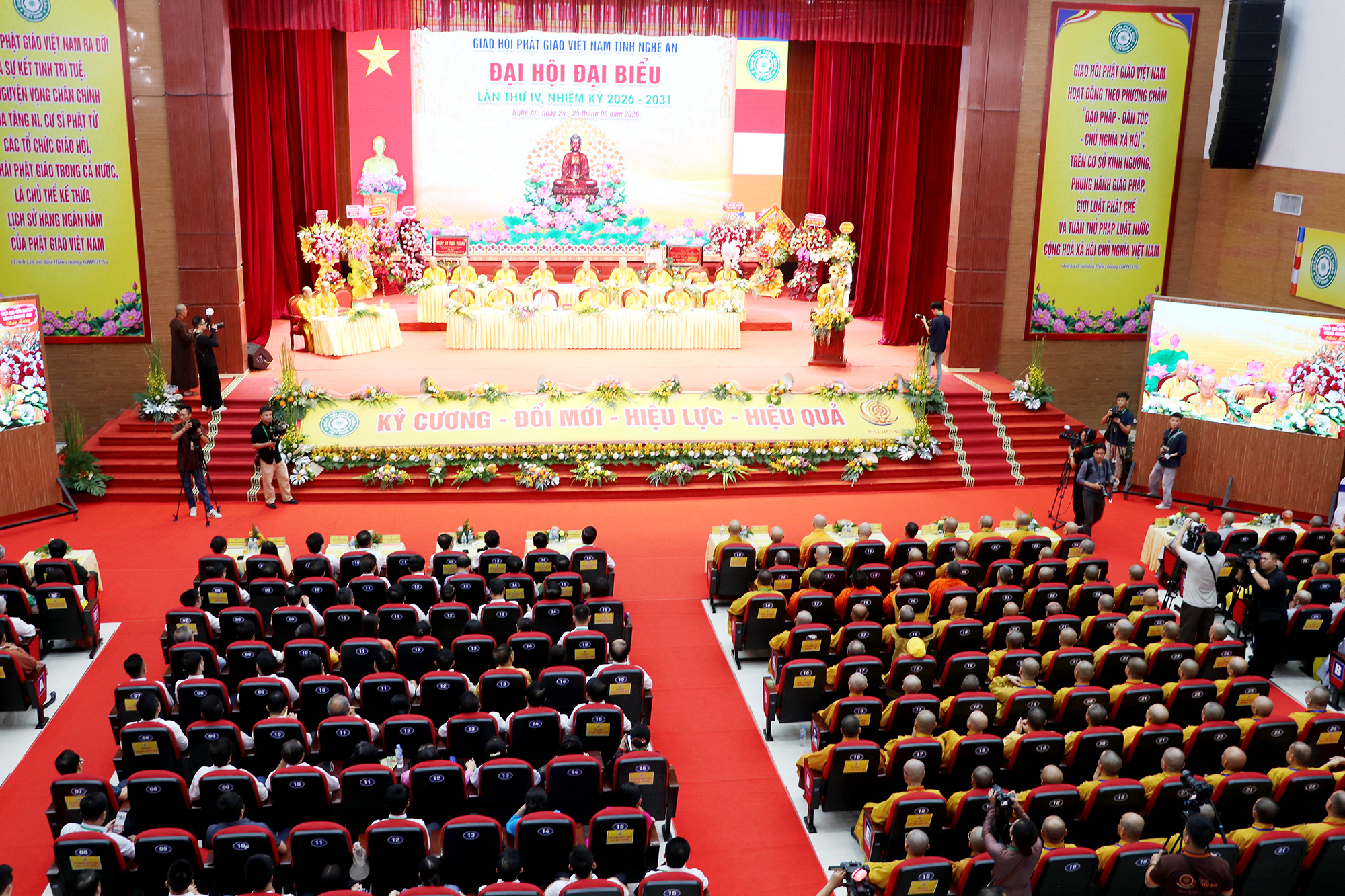
An overview of the 4th Congress of the Vietnam Buddhist Sangha of Nghệ An province for the 2026–2031 term
During its third term (2022–2026), local Buddhism achieved many important results across various fields. This was made possible by the close leadership and guidance of the Central Committee of the Vietnam Buddhist Sangha (VBS), support from all levels of authorities in Nghe An province, and effective coordination with provincial departments, agencies and mass organizations. The provincial Sangha upheld unity and harmony, kept its organization stable and carried out Buddhist affairs in a coordinated manner.
Monks, nuns and Buddhist followers across the province have always complied with the Party’s guidelines and the State’s policies and laws, and strictly followed the VBS’s Charter. They have actively joined patriotic emulation movements, social welfare and humanitarian charity activities. In doing so, they have helped strengthen great national unity, build cultural life at the grassroots level and contribute practically to local socio-economic development.
Strengthening the organization and improving Buddhist affairs
A highlight of the 2022–2026 term was the growth of the Sangha’s organization in both scale and quality.
After the 3rd Buddhist Congress, the provincial Executive Board was consolidated with 28 members, including 15 standing members and 13 members. The organizational structure remained largely stable. Tasks were assigned more clearly, enabling the specialized boards and the provincial VBS’s Office to play their roles in each field.
The province now has 78 places of worship, about 8.7 times the number in 2011. Major pagodas in the province include Dai Tue, Co Am, Chi Linh, Diec, Can Linh and Phuc Lac.
The province’s network of monasteries has received growing attention. Many pagodas have been restored, embellished or newly built, meeting people’s needs for belief activities. Planning, construction permits and the restoration of religious activities have been carried out in a coordinated way, with active cooperation between monks, nuns and local authorities. This lays an important foundation for the stable and sustainable development of Buddhism in the province in the new period.
As of 2025, 122 monks and nuns were practicing and serving at places of worship in the province. This increase meets the legitimate religious needs of Buddhist followers and local people. It also expands the capacity to guide Buddhist activities at the grassroots level. In a large province with many mountainous and remote areas, having more monks and nuns in charge of pagodas helps maintain stable activities and reduces the number of pagodas without regular guidance.
Notably, monastic affairs gradually shifted from a focus on numbers to improving quality and responsibility in religious practice.
Records of monks and nuns were updated and standardized. The issuance of monk and nun certificates, ordination certificates and summer retreat certificates, as well as the management of records on ordination, transfers and abbotships, followed the Sangha’s procedures. The Executive Board also set up an examination council to assess abbots, candidates for abbot appointments and those transferring to the province.
The assessment covers not only precepts and Buddhist knowledge, but also religious practice skills and legal knowledge. Those put in charge of a pagoda must therefore meet requirements on moral conduct, professional competence and the ability to organize activities in practice.
During the term, the provincial VBS’s Executive Committee issued decisions appointing 13 abbots and approving 22 transfers. Inspection and supervision of religious practice at monasteries were also strengthened, helping maintain discipline and unity within the Sangha.
Education and training of talented monastics also improved. Although the province does not yet have its own intermediate Buddhist school, the Sangha has enabled monks and nuns to study at Buddhist academies, intermediate Buddhist schools and institutions of the national education system.
The summer retreat (Vassa) was observed seriously, in line with monastic tradition. The province has two retreat venues: one for monks at Diec Pagoda and one for nuns at Can Linh pagoda, both in Thanh Vinh Ward. Besides traditional study and practice, the program also offers training in law, administrative skills and information technology. Linking practice with the demands of modern life reflects an increasingly practical approach to training monks and nuns.
These results mark a notable shift. The development of Buddhism is measured not only by the number of monks, nuns or restored pagodas, but also by the quality of its clergy, clear division of responsibilities and the ability to meet practical needs at the grassroots level.
Expanding Dharma propagation to the community
While organizational work laid the foundation for stability, the spread of Dharma propagation, guidance for Buddhist followers and cultural activities gave Nghệ An Buddhism clear vitality during the past term.
Many monasteries continue to hold regular Dharma talks, doctrine classes and retreats. Dharma propagation is increasingly linked to social life, with a focus on ethics, lifestyle, compassion, doing good and responsibility toward family and community.
Dharma propagation has also reached mountainous, remote and border areas. Monks and nuns combine Dharma talks with charity and social welfare activities. This brings Buddhist teachings closer to local people, meets their spiritual needs and strengthens community bonds.
During the term, the province held 107 summer retreats for young people, with more than 43,000 participants. It also held 257 ceremonies of taking refuge in the Three Jewels for over 62,000 Buddhist followers. These figures show the growing reach of guidance for Buddhist followers. More importantly, the retreats have become a space for teaching young people ethics, life skills and a spirit of sharing.
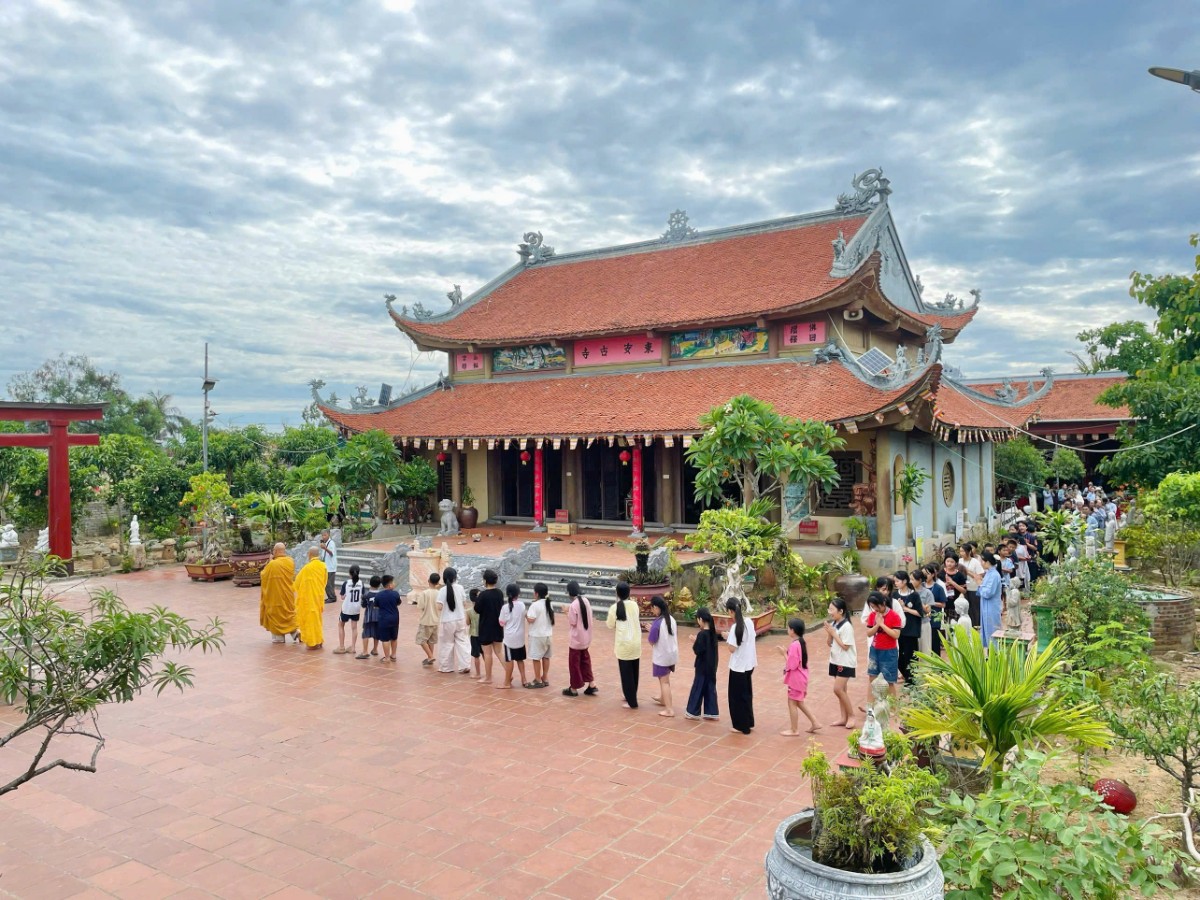
A summer retreat for children held at a pagoda
In addition to summer retreats, many pagodas hold doctrine classes, one-day peaceful retreats, retreats for students and themed activities. The province has 534 Buddhist practice groups and lay associations operating stably, with activities such as chanting sutras, reciting the Buddha’s name, listening to the Dharma and community gatherings.
These grassroots practice groups make Buddhist practice a regular part of followers’ lives, not just something for major festivals. They also serve as a channel for the Sangha to guide people to practice belief and religion in line with the true Dharma, build a civilized lifestyle and take an active part in local cultural and social activities.
Buddhist cultural work combines preserving traditions with promoting their value in contemporary life.
Many places of worship have been restored and embellished. Attention has been paid to researching and preserving ancient statues, woodblocks, stone steles, old bells, Hán Nôm texts and traces of Buddhist architecture. Some valuable documents have been copied and digitized, helping preserve the long-standing historical and cultural values of Buddhism in the Nghệ region.
Major ceremonies such as Vesak, Vu Lan, the Buddha’s Enlightenment Day and memorial services are held solemnly. They meet religious needs while creating cultural spaces that bring communities together.
Research, collection and preservation of Buddhist cultural heritage continue to receive attention. Efforts focus on discovering, archiving and studying valuable materials such as ancient Buddhist statues, woodblocks, steles, old bells, Hán Nôm texts, relics and architectural ruins. This affirms the historical depth and cultural value of Nghệ An Buddhism in the nation’s development.
Many pagodas have adopted the models “Green pagoda, beautiful scenery, harmony with nature,” “Outstanding pagoda accompanying new rural development” and “Outstanding pagoda accompanying civilized urban development.” The Sangha also coordinated in reviewing and granting 9,541 “Cultured Buddhist Family” certificates. This encourages Buddhist followers to build harmonious families, abide by the law and actively join residential movements.
Beyond preserving worship spaces, cultural work has brought Buddhist values into community life. It links practice with environmental protection, a civilized lifestyle and the preservation of local cultural identity.
Spreading the spirit of a good life, both secular and religious
Throughout the 2022–2026 term, the spirit of “protecting the nation, bringing peace to the people and accompanying the nation” was shown through the participation of monks, nuns and Buddhist followers in patriotic emulation movements and local social activities, worth over 250 billion VND in total.
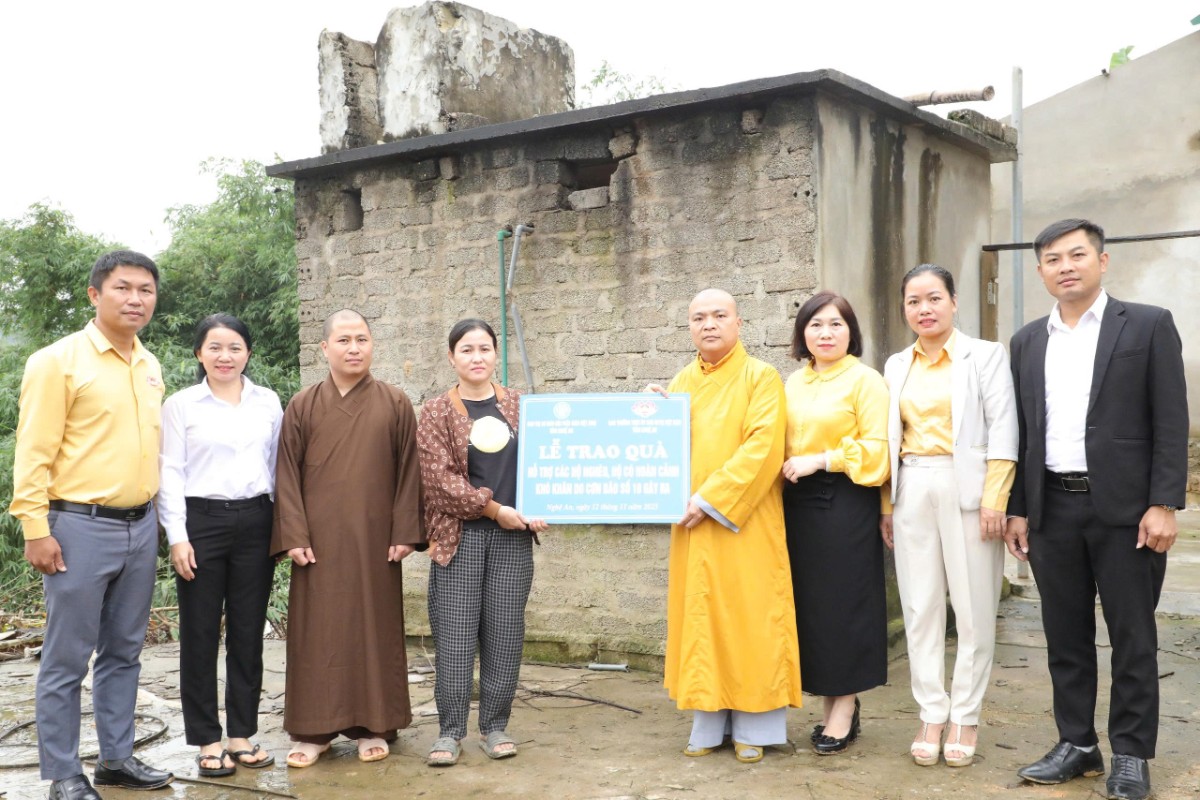
A representative of the VBS Executive Committee in Nghe An province presents gifts to local poor households
The Sangha encourages monks, nuns and Buddhist followers to follow the Party’s guidelines and the State’s policies and laws. It also urges them to actively respond to campaigns to build cultural life, new rural areas and civilized urban areas, and to prioritize Vietnamese goods.
In many localities, Buddhist establishments and followers have donated land, money and labor to build roads and community facilities. Activities to protect the environment, release fish to restore aquatic resources and create green, clean landscapes at monasteries have been maintained, raising awareness of environmental responsibility.
Gratitude activities are held regularly, including memorial and requiem ceremonies for heroic martyrs, and visits and gifts for policy beneficiary families, war invalids, sick soldiers and people with meritorious services to the revolution. Many activities take place at martyrs’ cemeteries and historical sites, reflecting the moral principle of “When drinking water, remember its source” and the close bond between Buddhism and national traditions.
The Sangha also encourages young Buddhists to fulfill their civic duties and take part in maintaining security, order, traffic safety and residential activities. Outstanding monks, nuns and followers participate in the Fatherland Front and social organizations. They help convey the legitimate thoughts and aspirations of Buddhists and strengthen social consensus.
Coordination between the Sangha and Party committees, authorities, the Fatherland Front and relevant agencies has been strengthened. Through this, many difficulties related to religious activities, places of worship and Buddhist affairs have been addressed with guidance. This has also enabled Buddhist establishments to play a greater role in local life.
Beyond the province, Buddhism in the locality has stepped up exchanges with Buddhist communities in other localities and in neighboring Laos, especially the Lao Buddhist Fellowship Organization of Xiangkhouang province. Visits, exchanges and the joint construction of the Vietnam–Laos Friendship Pagoda have helped nurture the traditional friendship and promote the image of a harmonious, friendly Vietnamese Buddhism.
Looking back on the 2022–2026 term, the province VBS achieved results in many areas, from strengthening its organization and training clergy to Dharma propagation, guiding Buddhist followers, preserving culture and joining social activities. This is an important foundation for Buddhism to further promote unity and harmony, accompany people from all walks of life and contribute practically to the homeland’s development in the new term.
Hương Huyền
THỐNG KÊ TRUY CẬP
Số lượt truy cập hiện tại: 53
Tổng số truy cập: